Introduction
Have you ever looked at a world map and wondered just how massive some countries really are? It’s one thing to see them on a map — it’s another to grasp that Russia alone is larger than the entire continent of Oceania, or that Canada stretches so far north that most of it is permanently frozen tundra.
Whether you’re a student preparing for a geography quiz, a traveler planning your next adventure, or simply someone who loves fascinating facts about our world, understanding the largest countries by area puts the sheer scale of our planet into perspective.
In this guide, we’ll walk you through the top 10 largest countries in the world by total area, including both land area and water area, using the most up-to-date 2026 figures from authoritative sources like the CIA World Factbook and Britannica. We’ll also cover countries and dependencies by area, explain how disputed territories and overseas territories affect rankings, and show you how the largest countries compare to the smallest countries in the world.
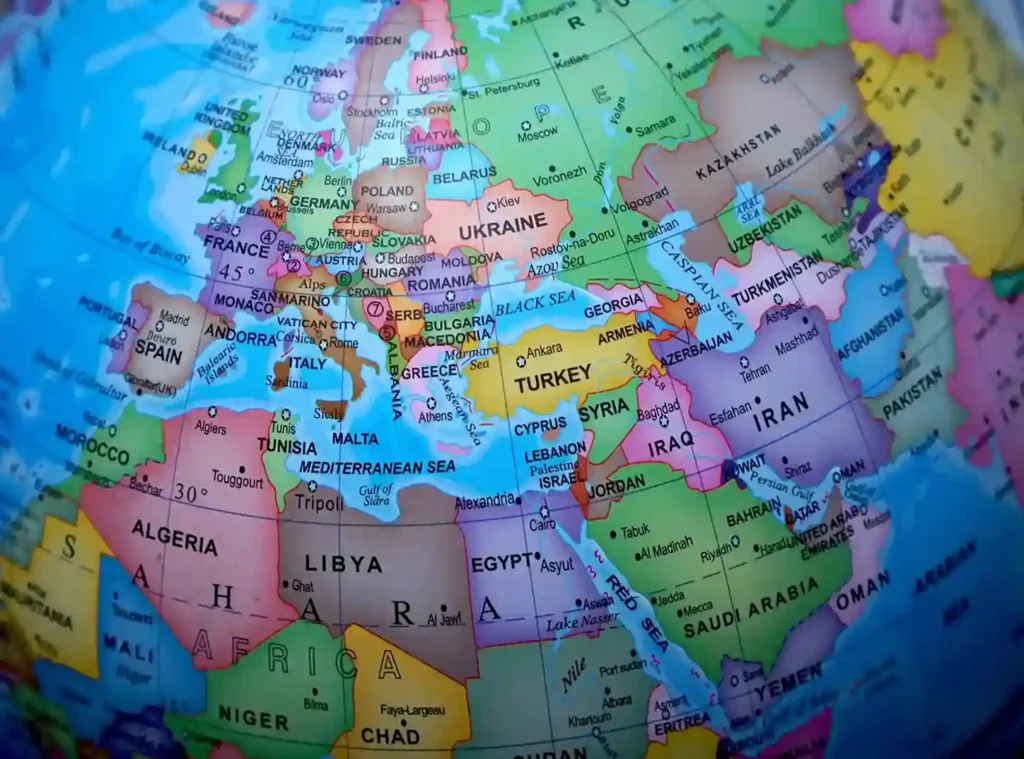
What Does “Largest Country” Mean?
Before diving into the list, it’s important to clarify what “largest” means in this context. Countries can be measured by:
- Total area — land area + water area (lakes, rivers, coastal and territorial waters)
- Land area only — excluding all internal water bodies
- Total landmass — sometimes used interchangeably with land area
Most official rankings, including those from the UN figures and CIA World Factbook, rank countries and territories by total area, which is the standard we use here.
It’s also worth noting that some entries in area rankings include dependencies overseas territories and overseas collectivities that are administered by a country but not considered independent states. For example, Greenland is part of the Kingdom of Denmark, and several Pacific islands fall under the Kingdom of the Netherlands. We’ll flag these where relevant.
Top 10 Largest Countries in the World by Area (2026)
Here are the world’s largest countries ranked from largest to the smallest among the top 10, based on total area in square kilometers (km²):
1. Russia — 17,098,242 km²
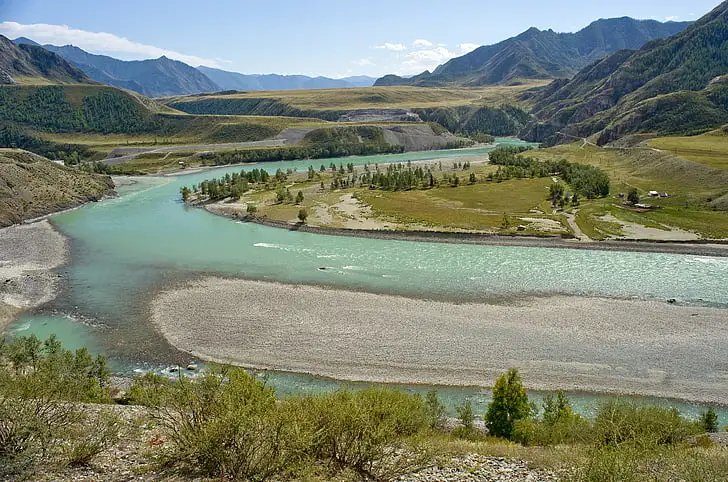
Russia is the largest country in the world by a significant margin — it spans across both Europe and Asia, covering more than 11% of Earth’s total land area. Its European part alone is the largest in Europe, while its Asian territory stretches all the way to the Pacific Ocean.
Russia’s total area includes vast mountain ranges, the world’s deepest lake (Lake Baikal), and territories like Svalbard and Jan Mayen administered under Norwegian sovereignty nearby. Russia also administers Queen Maud Land claims in Antarctica. With such an enormous landmass, Russia borders 14 countries — more than any other nation on Earth.
Interestingly, despite being the largest country in the world, Russia’s population is relatively modest given its size, making it one of the most sparsely populated large nations. Russia’s vast territory means its population density is extremely low compared to smaller countries.
Continent: Europe/Asia | Capital: Moscow
2. Canada — 9,984,670 km²
Canada is the second-largest country in the world by total area and the largest country in North America. It is also the second-largest country by land area when water bodies are excluded. Canada’s geography is defined by its massive northern territories, extensive coastline, and the Great Lakes shared with the U.S.
Much of Canada’s northern landmass is uninhabited permafrost and tundra, making it a country with one of the world’s lowest population densities despite being the second-largest country globally.
Continent: North America | Capital: Ottawa
3. United States — 9,833,517 km²
The United States is the third-largest country in the world by total area, and depending on the measurement method used, it sometimes ranks as the third or fourth-largest country by land area. The U.S. includes 50 states, the District of Columbia, and several overseas territories including Puerto Rico and Guam.
The country’s geography ranges from Arctic tundra in Alaska to tropical islands in Hawaii. When counting only land area in square kilometers, China occasionally ranks ahead of the U.S., making the exact order a subject of ongoing geographic dispute depending on how disputed territories like Aksai Chin and the South China Sea islands are counted.
Continent: North America | Capital: Washington D.C.
4. China — 9,596,960 km²
China is either the third or fourth-largest country in the world depending on the measurement criteria. By total area, China covers approximately 9.6 million km², making it the largest country entirely in Asia. China’s geography includes everything from the Himalayan mountain ranges in the west to the coastal plains of the east.
China’s borders include several disputed territories, including parts of the South China Sea and the Aksai Chin region. Mainland China’s figures exclude Taiwan and the special administrative regions of Hong Kong and Macau in some calculations.
Continent: Asia | Capital: Beijing
5. Brazil — 8,515,767 km²
Brazil is the fifth-largest country in the world and the largest country in South America. It holds nearly half of South America’s total land area. Brazil is also the largest country in the Southern Hemisphere.
Brazil’s landmass is dominated by the Amazon rainforest — the world’s largest tropical rainforest — which covers approximately 60% of the country. Brazil also has an extensive coastline along the Atlantic Ocean and shares borders with 10 of South America’s 12 sovereign nations.
Continent: South America | Capital: Brasília
6. Australia — 7,692,024 km²
Australia is the sixth-largest country in the world by total area and is unique in being the only country that occupies an entire continent. As both a country and a continent, Australia’s landmass is often discussed separately from other large nations.
Australia is classified as an island country due to being surrounded entirely by ocean. It is the largest country in Oceania by a significant margin. Australia’s interior, known as the Outback, is largely arid and uninhabited. The country also administers several external territories, including Christmas Island and Cocos Islands.
Continent: Oceania | Capital: Canberra
7. India — 3,287,263 km²
India is the seventh-largest country in the world by total area and the largest country in South Asia. Despite being seventh in area, India is the most populous country in the world as of 2024, surpassing China.
India’s landmass is defined by the Himalayas to the north, the Thar Desert to the west, and the Deccan Plateau in the south. India also has a significant coastline and administers island territories including the Andaman and Nicobar Islands and Lakshadweep.
Continent: Asia | Capital: New Delhi
8. Argentina — 2,780,400 km²
Argentina is the eighth-largest country in the world and the second-largest country in South America after Brazil. Argentina’s territory stretches from the subtropical north all the way to the sub-Antarctic south, including parts of Tierra del Fuego.
Argentina also claims sovereignty over the Falkland Islands (Islas Malvinas), which are currently administered by the United Kingdom — one of the more well-known international boundary disputes in the region. Argentina’s total area includes a diverse range of landscapes from the Andes mountain ranges to the Pampas grasslands.
Continent: South America | Capital: Buenos Aires
9. Kazakhstan — 2,724,900 km²
Kazakhstan is the ninth-largest country in the world and the largest landlocked country on Earth. Located in Central Asia, Kazakhstan is country located at the crossroads of Europe and Asia.
Kazakhstan’s vast steppes and semi-arid terrain make up much of its interior. The country also borders the Caspian Sea, which, despite being called a sea, is technically a landlocked body of water. Kazakhstan gained independence from the Soviet Union in 1991 and has since grown into one of Central Asia’s most significant economies.
Continent: Asia/Europe | Capital: Astana
10. Algeria — 2,381,741 km²
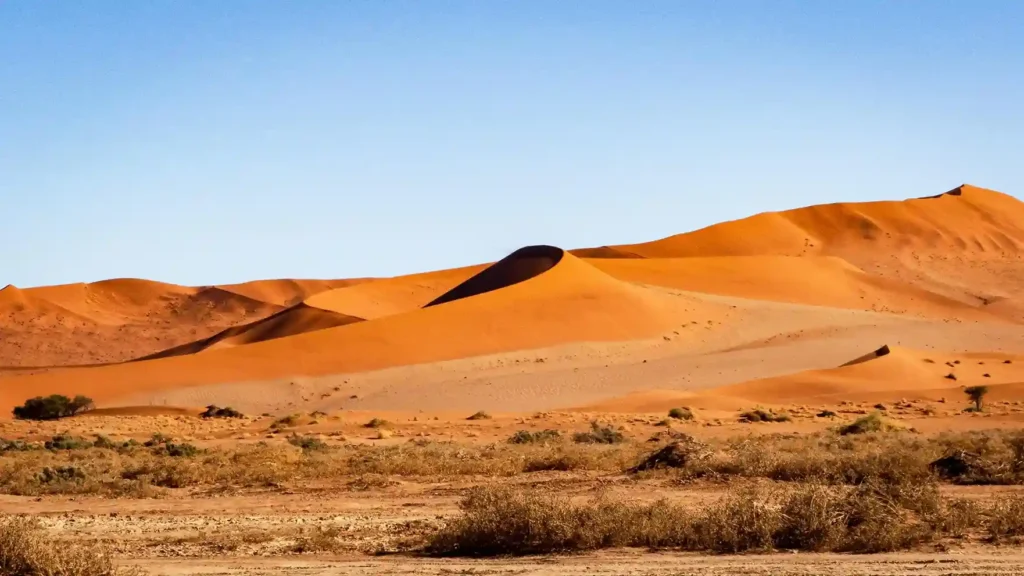
Algeria is the tenth-largest country in the world and the largest country in Africa. Algeria’s total area includes a significant portion of the Sahara Desert, which covers nearly 90% of the country’s landmass.
Algeria is also notable because it borders Western Sahara — a disputed territory in Northwest Africa whose sovereignty remains unresolved. Western Sahara is one of the most frequently cited examples of disputed territories in geographic rankings, as its inclusion or exclusion can affect the rankings of countries by area in Africa.
Continent: Africa | Capital: Algiers
Countries and Dependencies by Area — What You Need to Know
When looking at countries and territories rankings, it’s important to understand the role of dependencies. A dependency is a territory that is under the jurisdiction of another country but is not fully sovereign. Examples include:
- Greenland — part of the Kingdom of Denmark (Denmark proper excludes Greenland in most area calculations)
- French Guiana, Mayotte, and Réunion — overseas territories of mainland France
- Cook Islands and Niue — Pacific island nations in free association with New Zealand, often counted separately in Oceania rankings
- Sint Maarten and Tokelau — small island dependencies under the Kingdom of the Netherlands and New Zealand respectively
- Peter I Island and Bouvet Island — Norwegian dependencies near Antarctica
- Easter Island (Rapa Nui) — a special territory of Chile in the Pacific
These dependencies and territories matter because they affect how total land area in square kilometers is calculated for each country. For example, if France’s overseas collectivities are included, France’s total area grows significantly beyond mainland France.
Disputed Territories and Their Impact on Area Rankings
Geographic rankings are rarely simple. Several factors complicate the world by area rankings:
Disputed territories like Western Sahara, Aksai Chin (India/China), and various South China Sea islands mean that different sources — CIA World Factbook, UN figures, Britannica — sometimes report different total area figures for the same country.
Antarctica is another special case. No country owns Antarctica outright, though several nations including Norway (Queen Maud Land), Australia, and Argentina have made territorial claims. These are not counted in standard country area rankings.
Land reclamation projects, particularly in parts of Asia, also mean that total area figures can shift over time as countries literally build new land into the ocean.
Largest Country in Each Continent (2026)
| Continent | Largest Country | Total Area (km²) |
|---|---|---|
| Asia | China | 9,596,960 |
| Africa | Algeria | 2,381,741 |
| North America | Canada | 9,984,670 |
| South America | Brazil | 8,515,767 |
| Europe | Russia (European part) | 3,972,400 |
| Oceania | Australia | 7,692,024 |
Want to explore more African nations beyond the largest ones? Try our random African country generator to pick one randomly.
How Do the Largest Countries Compare to the Smallest?
The contrast between the world’s largest and smallest countries is staggering. Russia’s total area of over 17 million km² dwarfs the world’s smallest countries:
- Vatican City — 0.44 km² (the smallest country in the world and a microstate entirely within Rome, Italy)
- Monaco — 2.02 km²
- San Marino — 61 km²
To put it another way: Russia is approximately 39 million times larger than Vatican City. If you want to explore the smallest countries in the world in detail, check out our guide on the 10 Smallest Countries in the World.
While these giants dominate the map, some of the world’s least known countries are so obscure that most people can’t even point to them on a globe.
The gap between the largest and smallest countries highlights just how unequal the world’s landmass distribution really is. The top 10 largest countries together account for roughly 49% of the world’s total land area, while hundreds of smaller nations share the remaining half.
Want to Discover a Random Country?
Studying the world’s largest countries is one thing — but what if you want to explore all 195 countries randomly? Our Random Country Generator tool lets you instantly discover a random country from anywhere in the world, with continent filtering so you can focus on specific regions like Asia, Africa, or the Americas.
It’s a great tool for geography students, trivia nights, travel planning, or simply satisfying your curiosity about places you’ve never considered visiting. Try spinning for a random country today and see where in the world you land!
Conclusion
The world’s largest countries are defined not just by their size but by the geographic, political, and cultural complexity that comes with governing vast territories. From Russia’s enormous transcontinental landmass to Australia’s island continent, each of the top 10 largest countries in the world tells a unique story about how nations interact with the land they occupy.
Understanding how countries are measured — whether by total area, land area, or including overseas territories and dependencies — is key to interpreting any ranking accurately. Disputed territories, overseas collectivities, and land reclamation projects all ensure that these rankings remain dynamic rather than fixed.
Want to continue exploring world geography? Check out our articles on the 10 Smallest Countries in the World and How Many Countries Are in the World for more fascinating geographic insights. And don’t forget to try our Random Country Generator to discover a random country from anywhere on the globe!
Frequently Asked Questions – FAQs
What is the largest country in the world by total area?
Russia is the largest country in the world by total area, covering approximately 17,098,242 km². It spans both Europe and Asia and is nearly twice the size of the second-largest country, Canada.
What is the largest country in the world by land area only?
By land area alone (excluding water bodies), Russia remains the largest country in the world, followed by Canada, the United States, and China. The order can shift slightly depending on whether inland water bodies are included or excluded.
Is China or the United States larger?
China and the United States are very close in total area, which is why their ranking varies by source. By total area including water, the U.S. is generally ranked third and China fourth. By land area only, China often ranks third and the U.S. fourth.
What is the largest country in Africa?
Algeria is the largest country in Africa by total area, covering 2,381,741 km². It surpassed Sudan in 2011 when South Sudan gained independence, reducing Sudan’s total area.
What is the largest country in Asia?
China is the largest country entirely in Asia, covering approximately 9,596,960 km². Russia, while partially in Asia, is often categorized as a transcontinental country.
What is the largest country in Europe?
Russia is the largest country in Europe when its European part is considered, but if only countries entirely within Europe are counted, Ukraine is the largest country in Europe by area.
What is the largest country in Oceania?
Australia is the largest country in Oceania and is also unique in being the only country that occupies an entire continent.
What is the largest country in South America?
Brazil is the largest country in South America, covering approximately 8,515,767 km² — nearly half of the continent’s total land area.
How are dependencies counted in area rankings?
Dependencies like Greenland (Kingdom of Denmark) and overseas territories of mainland France are typically listed separately in countries and dependencies by area rankings. Whether they are included in a country’s total area depends on the source and methodology used.
What is the difference between total area and land area?
Total area includes both land area and water area (rivers, lakes, and sometimes coastal and territorial waters). Land area only counts the solid ground portion. Russia’s land area is approximately 16,376,870 km², while its total area is 17,098,242 km² — the difference being internal water bodies.