You Google “how many countries in the world” and get three different answers — 195, 197, 215. Confusing, right? You’re not alone. Millions of people search this every day and leave more confused than before. The problem is that “country” means different things to different organizations. In this article, we break down every number, explain the difference, and give you the definitive answer you’ve been looking for.
Once you know the answer, try our random country generator to explore every single one of them.
It’s one of those questions that sounds easy until you actually try to answer it. How many countries in the world are there, really? Depending on who you ask — the United Nations, the US Department of State, or Britannica — you might get a different number every time. This article breaks it all down clearly, so there’s no confusion left by the end.
How Many Countries in the World Are There in 2025?
The most widely accepted answer is 195 countries in the world as of 2025. This number comes from the US Department of State, which recognises 195 sovereign nations globally. However, the United Nations officially lists 193 member states — two fewer, because Vatican City and Kosovo are not UN members but are still recognised as independent states by many countries.
So the number of countries you get depends entirely on the organisation or source you consult.
What Does the United Nations Say?
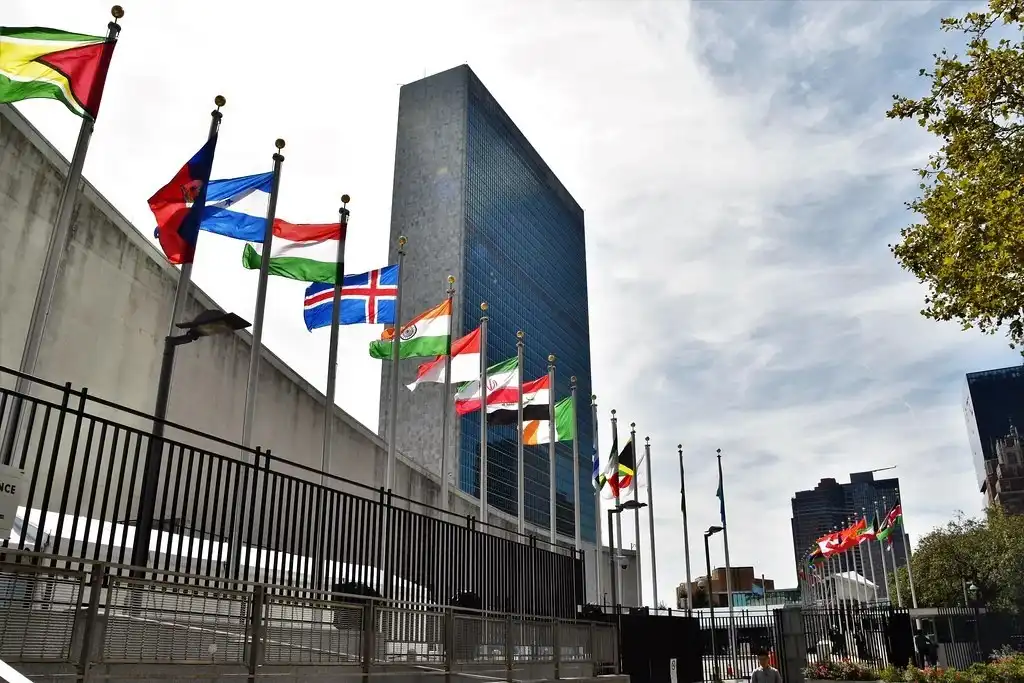
The UN is the most authoritative international organisation when it comes to recognising sovereign states. As of 2025, there are 193 UN member states that have formally joined the United Nations and abide by the United Nations Charter.
In addition to these, there are two non-member observer states of the UN:
• Vatican City (Holy See)
• State of Palestine
These two entities have observer status at the United Nations General Assembly, meaning they can participate in discussions but cannot vote. When these are included alongside the 193 member states, the total reaches 195 — which is why many sources, including the Department of State, use that figure.
Why Do Some Sources Say 197?
You may have seen the number 197 mentioned on platforms like Worldometer or in various geography resources. This figure typically includes the 195 recognised countries plus two additional territories that some consider distinct nations:
• Taiwan (officially the Republic of China)
• Kosovo
Taiwan is a fully functioning democratic republic with its own government, military, and economy. However, due to its complex relations with China, it is not a UN member and is not universally recognised as a sovereign state. Kosovo, similarly, has declared independence but has not received universal diplomatic recognition.
This is why the number can vary — it all comes down to how one defines statehood and sovereignty.
What Makes a Country a Country?
Understanding what makes a country officially a country requires looking at international law. Under customary international law and the Montevideo Convention, a state must meet four criteria:
1. A permanent population
2. A defined territory
3. An effective government
4. The capacity to enter into diplomatic relations
Recognition in international law is not automatic. A territory can meet all four criteria and still not be universally recognised. This is why the question of how many countries in the world exist remains genuinely complex — it’s not just geography, it’s politics.
The scholar Lauterpacht notably argued that recognition is a legal obligation once a state meets the necessary conditions, though this view remains debated in international circles.
Disputed Territories and Why They Complicate the Count
There are a lot of disputed territories around the world that blur the line between what is and isn’t a country. These are regions that either claim sovereignty or are claimed by another state. Here are some notable examples:
Taiwan
Taiwan operates as a democratic republic with full governmental functions, but its relations with China prevent it from gaining universal recognition. Most countries do not officially recognise Taiwan as a sovereign state, yet it functions as one in nearly every practical sense.
Kosovo
Kosovo declared independence from Serbia in 2008. Today it is recognised by over 100 countries but remains outside the UN due to opposition from Russia and China. It is a clear example of how diplomatic recognition shapes whether a territory is counted as a country.
Palestine
The State of Palestine is recognised by over 140 countries and holds non-member observer status at the UN. Arab nations have long supported Palestinian statehood. However, it is not a full UN member, making its status a subject of ongoing international dispute.
Western Sahara (Sahara / Sahrawi)
The Sahrawi Arab Democratic Republic, which claims the Western Sahara region, is one of the most complex territorial disputes in the world. Morocco controls most of the area, but the Sahrawi government in exile maintains international recognition from several nations. The sahara dispute remains unresolved decades after it began.
What About Territories, Dependencies, and Autonomous Regions?
Beyond countries, there are hundreds of territories, dependencies, and autonomous regions worldwide that are NOT independent countries but often get included in broader geographic lists. This is where numbers like 215 or higher come from.
Dependent Territories
These are regions governed by another country but with varying degrees of autonomy. Examples include:
• Greenland — an autonomous territory of Denmark. Despite its massive size, Greenland is not a sovereign state. The Faroe Islands are another autonomous region under Danish jurisdiction.
• French Polynesia — an overseas collectivity of France
• Aruba — a constituent country within the Kingdom of the Netherlands, located in the Caribbean
Areas of Special Sovereignty
Some regions, like Hong Kong, operate under a ‘one country, two systems’ framework. Hong Kong is part of China but maintains its own legal and economic systems. It is not a country, but it functions with significant autonomy — making it a unique case in international geography.
Northern Ireland
Northern Ireland is part of the United Kingdom, not an independent country. However, it is often confused as one due to its distinct cultural and political identity. It is one of four nations that constitute the UK, alongside England, Scotland, and Wales.
How Many Countries by Continent?
Here’s a quick breakdown of recognised countries by continent:
| Continent | Number of Countries |
| Africa | 54 |
| Asia | 48 |
| Europe | 44 |
| North America | 23 |
| Oceania | 14 |
| South America | 12 |
Wondering which of these are the tiniest? Explore the 10 smallest countries in the world and see how small a sovereign nation can actually get.
Explore the 10 largest countries in the world.
Curious about what makes each country visually unique? Explore the most interesting country flags in the world and the stories behind their designs.
This gives a total of 195 countries when using the Department of State’s definition. Note that the EU, while a powerful political and economic organisation, is not itself a country — it is a federation-like bloc of sovereign member states.
The Full List of Countries: Where to Find It
If you’re looking for the full list of countries of the world, the most reliable and definitive sources include:
• United Nations — lists all 193 UN member states plus observer states
• US Department of State — recognises 195 countries
• Britannica — provides detailed profiles for every recognised nation
• Worldometer — tracks real-time population and geographic data for countries worldwide
• World Bank — uses its own list for economic classification purposes
• CIA World Factbook (published by the intelligence agency) — includes countries,
territories, and dependencies
Each of these sources may have slight variations, which is why using multiple references is always recommended when doing research.
Know About How Many Countries: Key Numbers to Remember
To summarise everything clearly, here are the key numbers to know about how many countries exist depending on the source:
| Source | Number |
| UN Member States | 193 |
| US Dept. of State | 195 |
| Including Taiwan & Kosovo | 197 |
| Including all territories & dependencies | 215+ |
Will the Number Change in 2026?
The world is always changing politically. As of 2026, no major new countries have been officially added to the list of recognised nations. However, ongoing disputes — particularly around Palestine, Kosovo, Taiwan, and the Sahrawi region — mean that the number could shift if diplomatic recognition changes or new UN memberships are granted.
Regions like Greenland have also been in the global spotlight regarding potential independence, which could affect the count in the future. Any change in the number of recognised countries or recognised nations will depend heavily on UN specialised agencies and the broader international community’s response.
Final Answer to the Question
So, what is the definitive answer to the question of how many countries are in the world? Here it is, simply:
• 193 — if you count only UN member states
• 195 — if you include Vatican City and the State of Palestine as non-member observer
states
• 197 — if you also include Taiwan and Kosovo
• 215+ — if you include all territories, dependencies, and autonomous regions
The answer depends entirely on your definition of ‘country’. If you want to put that knowledge to use, our random country generator guide shows you exactly how to explore all 195 nations interactively. Politically, legally, and culturally, the concept of statehood is far more nuanced than it first appears. Whether you’re studying for a geography quiz, writing a report, or simply satisfying your curiosity, now you have a complete and honest answer.
In fact, many of the 195 recognised countries are so obscure they rarely make the news — explore the least known countries in the world to see which ones surprise you most.
Frequently Asked Questions – FAQs
How many countries in the world are officially recognised in 2025?
As of 2025, there are 195 officially recognised countries in the world according to the US Department of State. However, the United Nations recognises 193 member states. The difference comes from Vatican City and the State of Palestine, which hold non-member observer status at the UN but are still widely recognised as independent states.
Why do some sources say 197 countries instead of 195?
Some sources like Worldometer count 197 countries because they include Taiwan and Kosovo alongside the 195 recognised by the US Department of State. Taiwan functions as a fully independent democratic republic but is not a UN member due to its complex relations with China. Kosovo declared independence in 2008 but has not received universal diplomatic recognition, keeping it outside the United Nations.
What makes a territory an officially recognised country?
Under customary international law, a territory must meet four conditions to be considered a sovereign state — a permanent population, a defined territory, an effective government, and the capacity to enter into diplomatic relations with other states. However, meeting these conditions alone does not guarantee universal recognition. Political factors heavily influence whether a territory is formally recognised as a country by other nations and international organisations.
Are territories like Greenland, Hong Kong, and Aruba counted as countries?
No, territories like Greenland, Hong Kong, and Aruba are not counted as independent countries. Greenland and the Faroe Islands are autonomous territories under Danish jurisdiction. Hong Kong operates under China’s one country two systems framework with significant autonomy but remains part of China. Aruba is a constituent country within the Kingdom of the Netherlands located in the Caribbean. These are classified as dependent territories or autonomous regions, not sovereign states.
Could the number of countries in the world change in 2026?
Yes, the number of recognised countries in the world could change in 2026 if ongoing disputes are resolved or new diplomatic recognitions are granted. Regions like Palestine, Kosovo, Taiwan, and the Sahrawi Arab Democratic Republic in Western Sahara remain active disputes that could affect the count. Any formal addition to the United Nations member states or a major shift in diplomatic recognition by powerful nations could update the globally accepted number of countries