Finding solid material for teaching geography keeps getting easier as new geography teaching resources appear every year, from simple printables to full interactive platforms. This guide rounds up digital games, lesson materials, and assessment options that fit any grade level and any budget. Whether the goal is a five-minute warm-up or a full unit on the wider world, these picks are built to save prep time while keeping a class genuinely curious about the planet.
Mapping Tools and Interactive Maps for the Classroom
A good mapping tool is often the fastest way to make an abstract place feel real. Beyond single-purpose apps, broader interactive mapping tools let a class layer several data sets onto the same base map at once, comparing rainfall, population, or land use side by side.
Google Maps and Google Earth
Google Maps works well for street-level detail and everyday navigation practice, including real-time traffic and transit layers that make a lesson feel current rather than abstract. Google Earth takes things further with its free virtual globe, letting a class tour a mountain range or a coastline and measure distances between two cities in just a few clicks.
GIS and Geographic Data
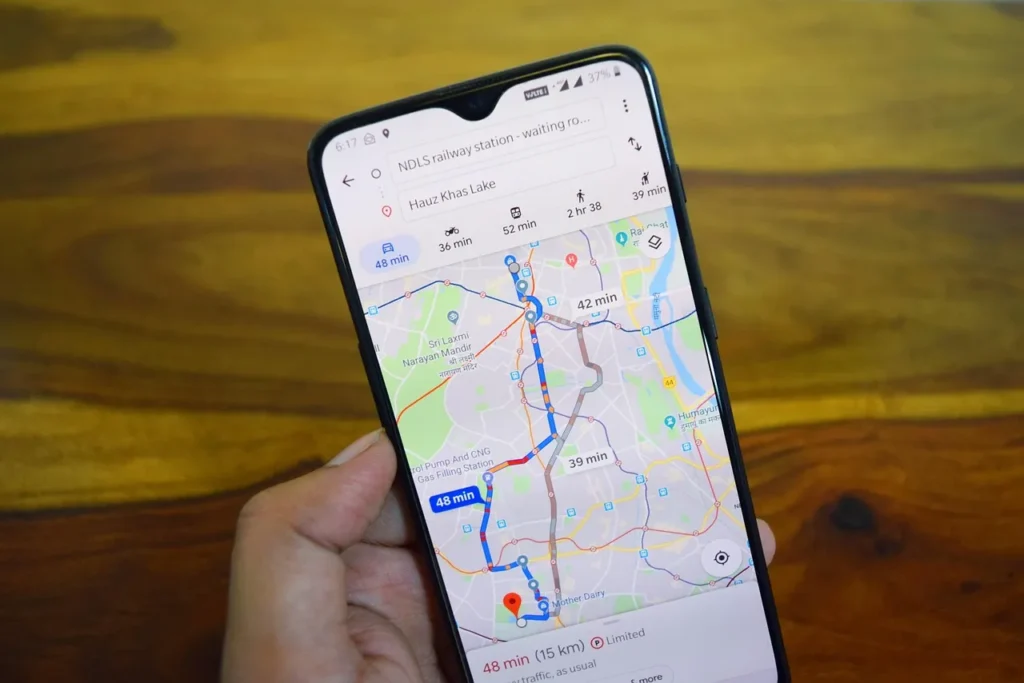
GIS, short for a geographic information system, turns raw geographic information into layered, explorable maps rather than flat images. Some platforms even let students create their own maps from scratch, marking routes, borders, or resource locations themselves. Comparing different types of maps, political, physical, and thematic, side by side is one of the fastest ways to build spatial reasoning early on.
Free Geography Games and Digital Tools for Every Budget
These quick games are one of the easiest ways to turn a five-minute gap into useful practice, and the site’s own roundup of the best games for students and classrooms is worth bookmarking for exactly this purpose. For a fully digital geography unit, pair one of these games with a mapping tool from the previous section. Most of these digital resources work on a tablet, laptop, or interactive whiteboard without extra installs, and a short list of reliable online resources can save an entire term’s worth of searching.
Geography Teaching Materials and Lesson Plans
A solid set of geography lesson plans removes the blank-page problem at the start of a unit, and good lesson planning usually starts with a clear learning goal rather than the activity itself. A short list of lesson ideas for map skills, climate, and population topics can fill an entire semester without much repetition. For a night with no prep time left, a ready-made lesson from a trusted source is worth bookmarking in advance. Several sites now publish free world geography lessons organized by region, which makes it easier to build a full-year scope and sequence. Virtual field trips are another easy add-on, letting a class tour a rainforest or a capital city without leaving the room, and real-world case studies, like a single river basin studied across three countries, help make abstract concepts concrete. These resources include worksheets, slide decks, and printable maps that pair with almost any curriculum already in place.
Assessment Tools for Geography Educators
A quick geography assessment at the start of a unit shows exactly where a class is starting from before any new material gets introduced. Building strong geography skills takes more than memorizing capitals; it means practicing map reading, scale, and direction over and over until it becomes automatic. The best formats focus on developing critical thinking skills through comparison and debate rather than rote memorization, and they tend to create richer learning experiences than a standard worksheet ever could. Mixing formats like this is one of the more effective teaching strategies for keeping a room genuinely engaged across a full unit.
Resources for Teaching World Geography
A well-organized set of resources for geography, bookmarked once, saves searching again every single week. Plenty of free resources exist for geography teachers on tight budgets, especially at the elementary level, and for elementary geography resources specifically, look for shorter reading passages paired with a simple map activity. Visual resources like labeled diagrams and photo sets help students who struggle with dense text, and many educational resources from museums and universities are free to use in a classroom setting.
A handful of the most useful geographical tools cost nothing at all. For a step up in engagement, interactive geography tools let students manipulate data instead of just reading about it, and many of these interactive tools work equally well on a tablet or a classroom projector. The best learning tools tend to combine a visual, a fact, and a follow-up question on the same screen. Not every classroom has room in the budget for paid teaching tools, which is exactly why a list like this one leans free. The common thread across every one of these tools in geography is that they turn a passive lecture into something students actually do.
Human Geography, Economic Geography, and Other Branches Worth Teaching
This branch looks at how people shape and are shaped by place, fitting naturally into a unit on migration or urban growth. A related branch, covering trade routes and resource distribution, connects well to a social studies or economics unit. Modern geography classrooms tend to blend both of these branches rather than teaching them in isolation, and a strong geography education usually draws on several branches instead of just one. Effective geography instruction often mixes at least two of these branches within a single unit, and rotating through a few of them keeps geography topics feeling fresh instead of repetitive across a full year. A mobile geography app can carry several of these branches onto a single device for a field-based lesson, and building a comprehensive geography curriculum around a rotation like this keeps an entire year from feeling stale.
National Geographic remains one of the most reliable places to find material on any of these branches, and National Geographic Education offers free maps, articles, and activities organized by branch and grade level. Thinking like a geographer, asking where something is and why it is there, is really the core skill underneath all of these branches. Many of these materials originally came out of a university geography department before being adapted for younger students, and professional development opportunities through organizations like the ones above can help fill in gaps for anyone teaching several branches at once. For the geological side of physical geography, a national geological survey agency is usually the best free source of maps and data.
Frequently Asked Questions
Do these tools work for a full range of grade levels?
Most can be scaled up or down. Simplify the reading level and format for younger students, and add more analysis and independent work for older ones.
Is a paid subscription needed to get started?
No. Nearly everything in this guide has a free tier, which makes it easy to try a few options before committing to anything paid.
How much prep time does a typical activity take?
Many of these picks scale from a five-minute warm-up to a full class period, depending on how deep the follow-up discussion goes.
Do any of these options work for remote or hybrid classes?
Yes. Digital maps, data platforms, and printable materials all translate cleanly to remote instruction since none require in-person equipment.
What is the easiest way to start building a full unit?
Pick one mapping tool, one game, and one short reading, then build outward from there once the class responds well.
Are there options for classrooms with limited internet access?
Yes. Printable maps, worksheets, and offline reading passages cover most of the same ground as their digital counterparts.
How can a class stay consistent across an entire school year?
Rotate through a small set of trusted go-to options rather than searching for something new every single week.
Where can a teacher find more practice material on this site?
The site’s own Countries of the World Quiz and Random Country Generator Guide both pair well with the material in this guide.
Bringing It All Together
In the end, every tool, lesson, and resource on this list exists to help students understand our world a little better, one region at a time. Start with one or two picks from this guide, build them into an existing plan, and add more as the class responds. For a quick and easy way to keep any lesson fresh, the site’s own Random Country Generator is always ready for a spontaneous detour into a country nobody in the room has thought about before.