Most travel content chases the same handful of hotspots: the same skyline photos, the same overcrowded viewpoints, the same ten cities everyone has already seen. This list flips that entirely. These are the least visited countries in the world, nations that, for reasons ranging from geography to government policy, welcome only a trickle of outside visitors each year. Some are tiny Pacific atolls a plane ticket and a prayer away from the nearest airport. Others are African island nations still building out basic tourist infrastructure. A couple are simply harder to reach than almost any other place on earth. Not every one of the world’s countries wants a flood of tourism, and not every traveler wants a crowd either. If you’re curious which country in the world actually sees the fewest visitors heading into 2026, and what it actually takes to get there, this guide walks through each one.
Why These Countries Receive So Few Tourists
There isn’t one single reason a nation ends up on a least visited countries list. Usually it’s a mix of geography, cost, and policy layered on top of each other. According to the UN World Tourism Organization (UNWTO), tourism to these places is tracked the same way it is anywhere else, through overnight international arrivals, and the numbers for the countries below are almost always in the low thousands or even the low hundreds annually.
Remoteness explains a lot of it. Several of these countries are remote Pacific islands with a single weekly flight and no real reason for a layover unless the country itself is the point. Instability keeps other countries off most people’s radar entirely, since travel insurers and government advisories steer tourists elsewhere long after the underlying risk has actually eased. Cost is another factor: a handful of countries on this list charge visa fees steep enough to filter out casual travelers before they even book a flight. And in a few cases, hospitality infrastructure just hasn’t caught up yet. There’s no shortage of beach, reef, and national park worth seeing, but hotels, guides, and reliable transport are still catching up to the natural scenery.
None of that means these are bad places to visit. It usually means the opposite: fewer crowds, more untouched coastline, and an experience that most travelers will never have.
Kiribati
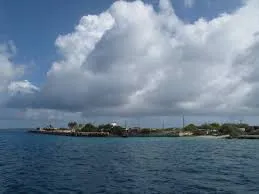
According to UNWTO tracking, this is frequently ranked as the least visited country on earth, and also the least visited country in the world by raw arrival numbers in recent tracking years. Spread across 33 low-lying islands straddling the equator, Kiribati (pronounced “kiri-bas”) is the only country on the planet that sits in all four hemispheres at once.
Most travelers land at Bonriki International Airport on South Tarawa, the capital, with connecting flights routed through Fiji, Nauru, or nearby island hubs. Service is infrequent and schedules shift often, so flexibility matters more here than almost anywhere else on this list.
The reward for the effort is real. The Phoenix Islands Protected Area is a UNESCO World Heritage Site, one of the largest marine reserves on the planet, with coral reefs, manta rays, and whale sharks in water so clear that dive visibility regularly exceeds thirty meters. Tarawa itself carries heavy World War II history, with rusted relics from the Battle of Tarawa still scattered along the shoreline. A tourist visiting Kiribati today is often the only outsider on the island that week.
Tuvalu
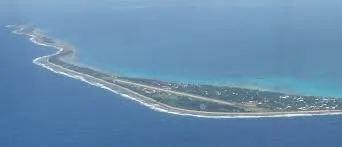
Tuvalu is one of the least visited countries on the planet, and one of the smallest by land area too. Its capital, Funafuti, sits on a narrow strip of atoll barely wide enough for the runway that doubles as the town’s main gathering space when no plane is landing.
Getting there usually means a Fiji Airways connection through Nadi, since Tuvalu has no long-haul international routes of its own. Once travelers arrive, the appeal is straightforward: turquoise lagoons, quiet coral atolls, and a pace of life almost nobody outside the South Pacific ever witnesses firsthand. Diving and snorkeling around the outer islands are the main draws, along with a genuine sense of arriving somewhere still untouched by mass tourism. Rising sea levels have also made Tuvalu something of a case study in climate resilience, which draws a small but steady trickle of researchers and journalists alongside the occasional adventure traveler.
Nauru
At just eight square miles, Nauru is the third-smallest country on earth and consistently ranks among the least visited countries anywhere. Decades of phosphate mining stripped much of the island’s interior, leaving a moonscape that sits in stark contrast to the beach ringing its coastline.
Nauru’s remoteness is part of why so few outsiders make it here. Flights connect primarily through Brisbane and other Pacific hubs, and there’s no dedicated tourism board pushing the destination the way neighboring islands do. For travelers who do make the trip, the appeal is less about polished attractions and more about the novelty itself: walking around an entire country in an afternoon, diving a coral wall that drops almost immediately offshore, and watching a place still figuring out life after mining.
Marshall Islands
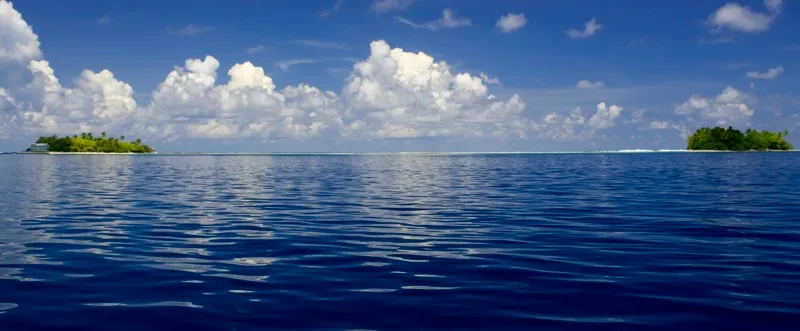
The islands sit scattered across the central Pacific, with the capital, Majuro, serving as the main gateway for anyone flying in. Air Marshall Islands connects the outer atolls domestically, and international arrivals typically route through Hawaii and Australia, since there’s no dedicated long-haul carrier flying the islands directly.
Visa on arrival is available for most nationalities, which keeps the paperwork simple even if the flights themselves are not. The biggest draw for adventurous travelers is Bikini Atoll, a bucket-list dive site where sunken WWII warships rest in some of the clearest lagoon water on the planet, a legacy tied directly to the islands’ history of nuclear testing during the mid-twentieth century. It’s a heavy backstory for a genuinely beautiful place, and part of why so few people ever see it in person.
Niue
Niue might be the most under-the-radar country in the entire South Pacific. With a population under two thousand, this raised coral island relies on a single weekly Air New Zealand flight from Auckland, and that one flight is essentially the only way in or out.
That kind of scarcity keeps visitor numbers tiny, but it also means Niue has some of the clearest ocean water anywhere in the world, ideal for diving with spinner dolphins and, seasonally, migrating humpback whales. Chasms, sea caves, and limestone cliffs replace the typical postcard beach here, and the entire island can genuinely feel private even at the height of its short tourist season.
Solomon Islands
The Solomon Islands stretch across nearly a thousand islands in the South Pacific, most of them still genuinely untouched by any real tourism industry. World War II history runs deep here, with wreck dives scattered through Iron Bottom Sound drawing a small but dedicated crowd of underwater explorers every year.
Underwater visibility around the islands is exceptional, and the surrounding systems rank among the healthiest left in the Pacific. A guided tour is the easiest way to navigate the more remote parts of the archipelago, since infrastructure thins out fast once you’re away from the capital, Honiara. Neighboring Papua New Guinea shares a similarly remote, adventure-heavy reputation, though it isn’t part of this particular ranking. For travelers chasing genuinely wild diving and jungle-covered national park terrain without another tour group in sight, this is about as far off the beaten path as the Pacific gets.
São Tomé and Príncipe
Off the coast of Africa in the Gulf of Guinea, this two-island nation quietly ranks among the least visited countries in Africa. Óbô National Park covers much of São Tomé’s volcanic interior, home to endemic birds found nowhere else on the planet, while Príncipe, even less visited than São Tomé itself, is where the best beaches are concentrated.
Visa on arrival makes entry simple, and flights typically connect through Lisbon given the islands’ Portuguese colonial history, with additional routes available through a handful of other African countries. Fort São Sebastião, the old Portuguese fortress overlooking the capital, now houses a small museum covering that colonial past. For a destination this scenic, it remains genuinely surprising how few travelers ever make it here.
Comoros
Comoros sits in the Indian Ocean between Madagascar and Mozambique, a volcanic archipelago that rarely makes it onto anyone’s travel radar. According to World Bank estimates, Comoros remains one of the poorest countries in the region, and that economic reality has slowed infrastructure development considerably.
What exists is genuinely worth the effort. Mount Karthala, an active volcano, dominates the main island, and the surrounding reef sees very few divers by international standards. Ylang-ylang plantations perfume entire hillsides, and the beaches rival anywhere else in the Indian Ocean, minus the crowds found on nearby Mauritius or the Seychelles.
Equatorial Guinea
Equatorial Guinea is one of the wealthier nations on this list thanks to oil, yet it remains one of the hardest African countries to actually visit. Visas can run several hundred dollars for most nationalities, and the approval process is notoriously unpredictable, which keeps casual tourism close to nonexistent.
For travelers who do make it through the paperwork, the payoff includes dense rainforest, volcanic peaks on Bioko Island, and an international airport in Malabo that remains one of the least trafficked capital city airports anywhere. It’s a genuinely rare stamp in a passport, and part of why this country stays firmly on any least visited countries list.
Somalia
In East Africa, this country carries a reputation shaped by decades of instability, and that reputation alone accounts for most of its position among the poorest countries in the world for tourism specifically. Political instability in parts of the country has kept most government travel advisories firmly in warning territory for years.
Somaliland, the self-declared northern region, is comparatively calmer and does see a small trickle of adventure travelers drawn to its ancient rock art and long, undeveloped coastline along the Gulf of Aden. Anyone visiting Somalia proper typically does so with serious security planning and local fixers rather than as an independent trip, which is exactly why arrival numbers stay so low.
North Korea
This is the most tightly controlled destination on this entire list. Independent travel simply doesn’t exist here; every visit runs through a state-approved guided tour, with operators like Young Pioneer Tours among the few Western companies that regularly organize trips into the country. Itineraries are fixed, guides accompany visitors everywhere, and photography is restricted in specific locations.
Getting a visa is its own process, arranged entirely through the tour operator rather than an embassy directly, and international flights or trains typically arrive via Beijing. One genuinely wild piece of trivia for train enthusiasts: the Moscow-to-Pyongyang route is often cited as the longest train in the world, a single service running well over ten thousand kilometers and more than a week across Russia into the country. For a nation this isolated, that rail link says a lot about how few ways in actually exist.
Turkmenistan
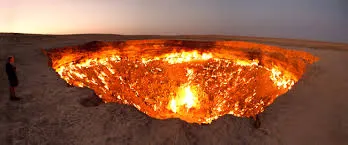
Turkmenistan is the only Central Asian country on this list, and arguably one of the strangest capital cities anywhere. Ashgabat, the capital, is famous for its white marble buildings and near-total absence of pedestrians, a surreal contrast to the Darvaza gas crater a few hours north, better known as the “Door to Hell,” a fifty-year-old natural gas fire still burning in the middle of the Karakum Desert.
Turkmenistan issues a genuinely limited number of tourist visas each year, and most travelers need government approval and a fixed itinerary to enter at all. Beyond the crater, Ancient Merv is a UNESCO World Heritage Site and one of the best-preserved Silk Road cities anywhere, a sprawling ruin that sees only a fraction of the visitors similar sites draw elsewhere.
Beaches, Atolls, and National Parks Worth the Trip
Strip away the visa headaches and long-haul flights, and what’s left across this list is a genuinely remarkable string of natural scenery. Ring-shaped islands surround nearly every Pacific nation here, often paired with underwater ecosystems that have barely been touched by divers at all. Remote islands throughout the Pacific hold some of the most untouched beach found anywhere on the planet, simply because so few people ever reach them.
On the African side of the list, protected land in São Tomé and Príncipe and the volcanic terrain of Comoros offer a completely different kind of unspoiled wilderness, heavy on plant and animal life and light on any real crowds. Whether it’s coral, jungle, or desert, the throughline across every country here is the same: places that would draw far bigger crowds if only they were easier to reach.
How to Reach the Least Visited Countries in the World
Getting to almost any destination on this list takes real planning. Flight options are often limited to a single weekly service, and airline networks connecting these countries are thin by design, built around local demand rather than tourism.
Visa requirements vary enormously. Some countries, like the Marshall Islands, offer straightforward visa on arrival for most nationalities. Others require formal visa approval arranged well in advance, and a few, such as Turkmenistan, only allow entry through officially organized travel rather than independent trips.
Regional hub airports matter more here than almost anywhere else in travel planning. Fiji Airways connects much of the South Pacific, while its weekly Auckland route reaches Niue and beyond, and flights from Fiji specifically link onward to Tuvalu, Kiribati, and the Marshall Islands. Local carriers like Nauru Airlines cover shorter interisland hops that would otherwise be nearly impossible to book. For the African nations covered here, airport connections generally run through Lisbon, Addis Ababa, or a handful of other regional hubs rather than any single dominant carrier.
Whichever country you’re aiming for, book flights and any required travel permits well in advance. Seats and available dates on these routes disappear fast precisely because there are so few of them to begin with.
How This List Compares to the World’s Most Visited Countries
It’s a strange thing to look at a ranking of the most visited countries in the world right after this one. France alone welcomes more visitors in a single year than every country on this list combined has seen in a decade. The gap says less about the quality of these countries and more about how uneven global tourism really is.
For travelers who’ve already checked the obvious names off a bucket list, these overlooked nations represent something genuinely different: a chance to see somewhere before it’s been discovered, reviewed, and reshaped by mass tourism the way so many popular places eventually are.
Should You Visit the Least Visited Countries in the World?
If you’re the kind of traveler who’d rather spin a globe than follow a crowd, this list is basically a treasure map. Not every dot on the world map needs to be on your itinerary, but if you’re chasing genuinely rare travel experiences, these countries deliver in a way busier places in the world simply can’t anymore.
Not sure where to start? Try our random country generator to land on a country at random, or check out our curated trip idea guide for a more planned approach to picking somewhere off the countries in the world list most people never think to check.
Frequently Asked Questions
What is the least visited country in the world?
Kiribati is most often cited as the least visited country in the world according to UNWTO tracking, though Tuvalu and several Pacific neighbors are close behind depending on the year and data source used.
Is North Korea the least visited country?
Not exactly, North Korea heavily restricts tourism and only allows visitors on guided tours, but it still receives more visitors annually than Kiribati or Tuvalu. What sets North Korea apart is government-imposed restriction, not simply low natural demand.
Do you need a visa for these countries?
Requirements vary widely. Some, like the Marshall Islands, offer simple visa on arrival. Others, including Turkmenistan, require advance approval through an authorized tour operator.
What is the smallest least-visited country?
Nauru, at roughly eight square miles, is both one of the smallest countries on earth and one of the least visited, thanks largely to its remote Pacific location.
Why are Pacific island nations so hard to reach?
Most rely on a single weekly flight or two, routed through regional hubs like Fiji or Nauru, which naturally limits how many travelers can visit in a given year.
Are these countries safe to visit?
Most are very safe, including every Pacific island nation on this list. A few, including Somalia, carry real security concerns that travelers should research carefully before booking anything.
Is it expensive to visit Equatorial Guinea?
Yes, relative to arrival numbers. Visa costs alone can run several hundred dollars for many nationalities, which is a major reason tourism there has stayed so limited.
What’s the best time of year to visit Kiribati, Tuvalu, and Niue?
Dry season timing varies by island, but generally the months outside the Southern Hemisphere’s wet season offer calmer seas and better flight reliability across the region.
Can you visit North Korea independently?
No. Every visit runs through an approved Western tour operator, with fixed itineraries and accompanying guides throughout the trip.
Which least visited country has the best diving?
Kiribati’s Phoenix Islands Protected Area and the Marshall Islands’ Bikini Atoll are consistently rated among the best, and least crowded, dive destinations anywhere on earth.
Final Thoughts
The least visited countries in the world aren’t hidden because they lack anything worth seeing. They’re hidden because geography, cost, or policy has kept them that way, at least for now. For travelers willing to put in the extra planning, that’s exactly the point. Ready to find your next stop? Click our random country generator and see where you land.
Looking for beauty over obscurity? Our roundup of the most naturally beautiful countries in the world covers the destinations known for jaw-dropping landscapes instead.